
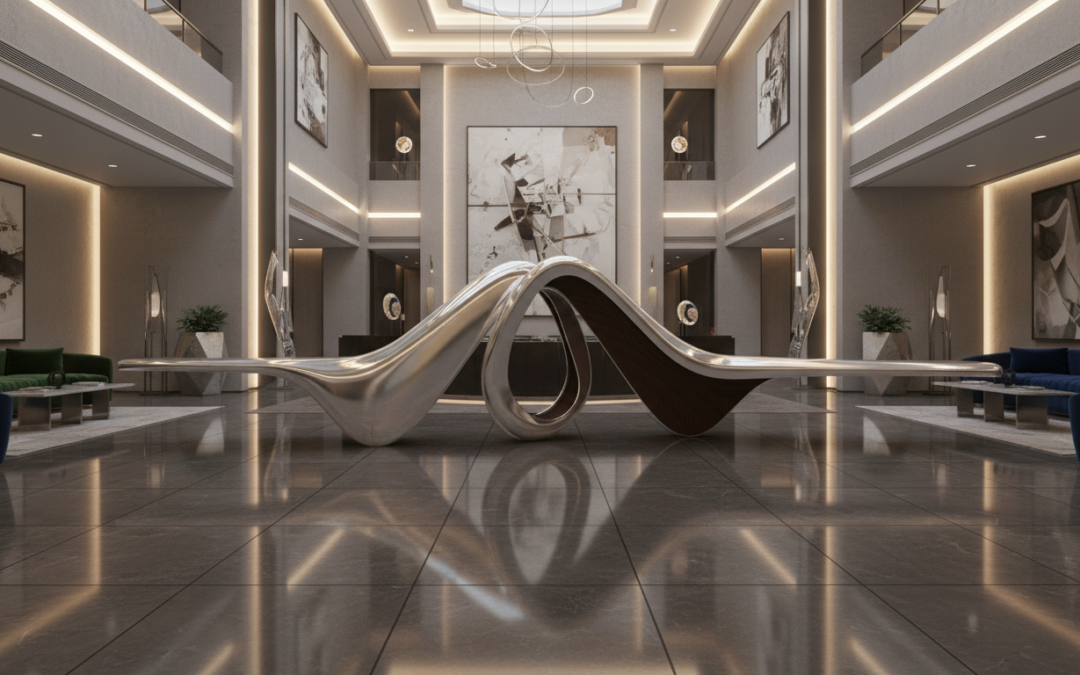
Modern architecture is evolving faster than ever before. Gone are the days when buildings were designed solely with pencil sketches and conventional drafting methods. Today, architects are embracing technology to create structures that are smarter, more efficient, and visually extraordinary.
One of the most exciting developments driving this transformation is parametric architecture.
From iconic museums and futuristic airports to luxury villas and bespoke furniture, parametric design is redefining how architects think, create, and build. In the UAE, where innovation and world-class architecture go hand in hand, parametric architecture is becoming an essential approach for projects that demand both creativity and precision.
In this guide, we’ll explore what parametric architecture is, how it works, its benefits, real-world applications, and why it’s becoming the future of architectural design.
What Is Parametric Architecture?
Parametric architecture is a design approach that uses algorithms, mathematical relationships, and digital tools to generate architectural forms.
Instead of manually drawing every detail, architects define a set of parameters—such as dimensions, angles, material properties, environmental factors, or structural rules. The software then automatically generates and updates the design whenever those parameters change.
Think of it this way:
In traditional architecture, changing one element often requires redrawing multiple parts of the project.
With parametric design, changing one parameter can instantly update the entire model while maintaining consistency across the design.
This allows architects to explore countless design possibilities in a fraction of the time.
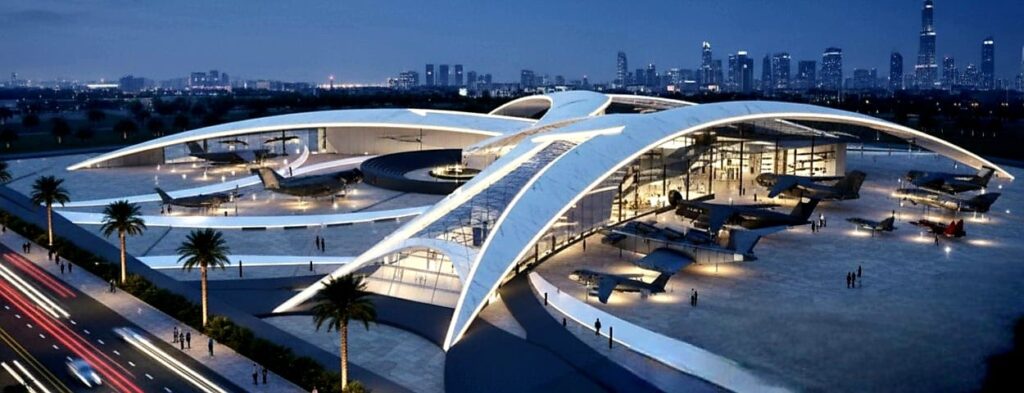
How Does Parametric Design Work?
Parametric architecture relies on relationships rather than fixed drawings.
For example, an architect may define:
- Building height
- Window spacing
- Sunlight orientation
- Structural grid
- Material thickness
- Roof curvature
- Ventilation requirements
These variables become interconnected.
If one parameter changes—such as increasing the building height—the entire model adapts automatically while respecting the design rules.
This results in faster iterations, fewer errors, and greater design flexibility
The Software Behind Parametric Architecture
Modern parametric design is powered by advanced digital tools, including:
- Rhino 3D
- Grasshopper
- Autodesk Revit
- Autodesk Dynamo
- Blender
- Houdini
- Autodesk Fusion 360
- Digital fabrication software
- CNC programming tools
Among these, Rhino and Grasshopper have become industry standards for creating complex parametric geometries.
Why Parametric Architecture Is Growing in the UAE
The UAE has positioned itself as one of the world’s leading hubs for architectural innovation.
Cities like Dubai and Abu Dhabi continue to push the boundaries of design by embracing advanced technologies, sustainable construction, and iconic architecture.
Parametric architecture perfectly aligns with this vision because it enables:
- Innovative building forms
- Sustainable design strategies
- Optimized structural systems
- Efficient material usage
- Faster design development
- Better collaboration between architects, engineers, and fabricators
As clients increasingly seek distinctive, high-performance buildings, computational design is becoming a valuable competitive advantage.
Key Benefits of Parametric Architecture
Unlimited Design Freedom
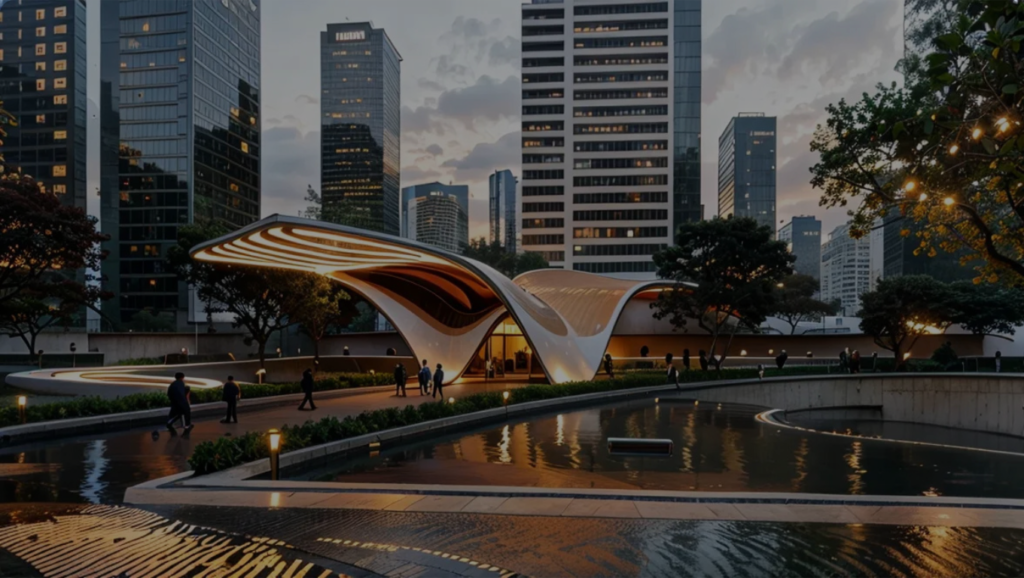
Traditional drafting often limits creativity because every modification requires significant manual work.
Parametric design removes these constraints.
Architects can generate flowing forms, organic geometries, intricate facades, and sculptural structures that would be extremely difficult to create using conventional methods.
Faster Design Iterations
Clients frequently request revisions during a project.
With traditional workflows, these revisions can consume considerable time.
Parametric models allow architects to update designs almost instantly by adjusting predefined parameters, making the design process significantly more efficient.
Improved Accuracy
Because every element is mathematically connected, parametric workflows reduce inconsistencies between drawings, models, and fabrication data.
This minimizes costly errors during construction.
Better Sustainability
Parametric architecture supports environmentally responsive design by allowing architects to optimize:
- Daylight penetration
- Solar shading
- Natural ventilation
- Material consumption
- Energy efficiency
This helps create buildings that perform better while reducing environmental impact.
Fabrication Ready
One of the greatest advantages of parametric design is its seamless integration with digital fabrication technologies.
Design models can be translated directly into manufacturing instructions for:
- CNC machining
- Laser cutting
- Robotic fabrication
- 3D printing
This shortens the transition from concept to construction.
Real-World Applications of Parametric Architecture
Parametric design is no longer limited to experimental projects.
Today it is widely used across multiple sectors.
Luxury Residential Villas
Modern villas increasingly feature:
- Curved facades
- Dynamic roofs
- Organic staircases
- Sculptural interiors
- Custom furniture
Parametric tools make these elements practical to design and manufacture.
Commercial Buildings
Office developments benefit from:
- Optimized floor layouts
- High-performance facades
- Daylight optimization
- Energy-efficient envelopes
- Flexible workspaces
Hospitality Projects
Hotels and resorts often use parametric design to create memorable guest experiences through:
- Feature walls
- Reception desks
- Ceiling installations
- Landscape elements
- Lighting concepts
Retail Spaces
Retail environments use computational design to develop:
- Brand-focused interiors
- Custom display systems
- Interactive installations
- Unique customer experiences
Product and Furniture Design
Parametric workflows extend beyond architecture into:
- Seating
- Tables
- Lighting fixtures
- Decorative panels
- Modular furniture
- Sculptural installations
Parametric Design vs Traditional Architecture
| Traditional Architecture | Parametric Architecture |
|---|---|
| Manual revisions | Automated updates |
| Fixed geometry | Dynamic geometry |
| Limited design options | Unlimited exploration |
| Slower workflow | Faster iterations |
| Higher risk of inconsistencies | Greater coordination |
| Separate fabrication workflow | Integrated digital fabrication |
Both approaches have their strengths, but parametric architecture offers greater flexibility for complex, high-performance projects.
Common Misconceptions About Parametric Architecture
“It’s only about futuristic buildings.”
Not true.
Parametric methods can be applied to minimalist homes, luxury villas, commercial interiors, furniture, and even renovation projects.
“It is too expensive.”
While the design process may require specialized expertise, parametric workflows often reduce costs by minimizing material waste, improving coordination, and preventing construction errors.
“It’s impossible to build.”
Modern CNC machinery, robotic fabrication, and advanced manufacturing techniques have made many complex geometries practical and cost-effective to produce.
The Future of Parametric Architecture
The future of architecture will increasingly combine:
- Artificial Intelligence
- Computational Design
- Digital Twins
- Robotics
- Smart Materials
- Sustainable Design
- Generative Design
- Advanced Fabrication
Architects will move beyond drawing buildings to designing intelligent systems that respond to environmental, structural, and human needs.
Parametric architecture will play a central role in this transformation.
Why Businesses and Homeowners Should Consider Parametric Design
Whether you’re planning a luxury residence, commercial development, hospitality project, or custom product, parametric design offers several advantages:
- Unique architectural identity
- Faster project development
- Better design flexibility
- Improved sustainability
- Precision manufacturing
- Optimized construction processes
- Long-term value through efficient performance
For clients looking to stand out in a competitive market, these benefits can make a meaningful difference.
Why Choose ZFA Studio?
At ZFA Studio, we combine creativity with advanced computational workflows to deliver architecture and design solutions that are innovative, functional, and fabrication-ready.
Our expertise includes:
- Architectural Design
- Interior Design
- Parametric Design
- Computational Design
- Product Design
- Digital Fabrication
- Technical Documentation
- Construction Coordination
- Custom Furniture Design
- Design Consultancy
By integrating digital technology with architectural thinking, we help clients transform ambitious ideas into buildable, high-quality spaces across the UAE.
Frequently Asked Questions
What is parametric architecture?
Parametric architecture is a design methodology that uses algorithms and digital tools to generate adaptable architectural forms based on defined parameters.
Is parametric architecture only for large projects?
No. It can be used for villas, interiors, furniture, retail spaces, offices, and custom installations of all sizes.
Which software is commonly used?
Rhino, Grasshopper, Revit, Dynamo, Blender, and various digital fabrication tools are widely used in professional workflows.
Is parametric architecture sustainable?
Yes. It supports optimized material usage, daylight analysis, energy-efficient forms, and environmentally responsive design strategies.
Can parametric designs be manufactured?
Absolutely. Modern CNC machining, laser cutting, robotic fabrication, and 3D printing make complex parametric designs practical to produce.