
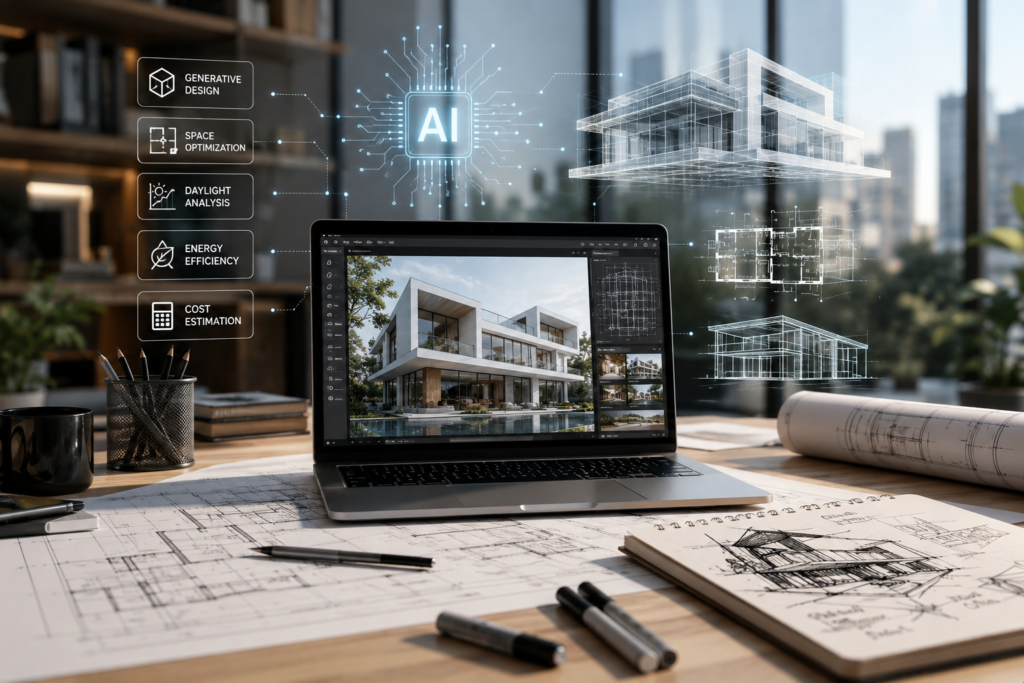
Artificial Intelligence (AI) has become one of the most talked-about technologies across industries, and architecture is no exception. From generating design concepts to improving project efficiency, AI is changing how architects and designers approach modern buildings. However, despite the excitement surrounding AI, one important fact remains unchanged—AI is a powerful assistant, not a replacement for professional architects.
At ZFA Studio, we believe that technology should enhance creativity rather than replace it. By combining architectural expertise with advanced digital tools, our team delivers spaces that are innovative, functional, sustainable, and uniquely tailored to every client.
In this article, we’ll explore how AI is transforming architecture and interior design, where it provides the greatest value, and why experienced architects continue to play the most important role in creating meaningful spaces.
What Is AI in Architecture?
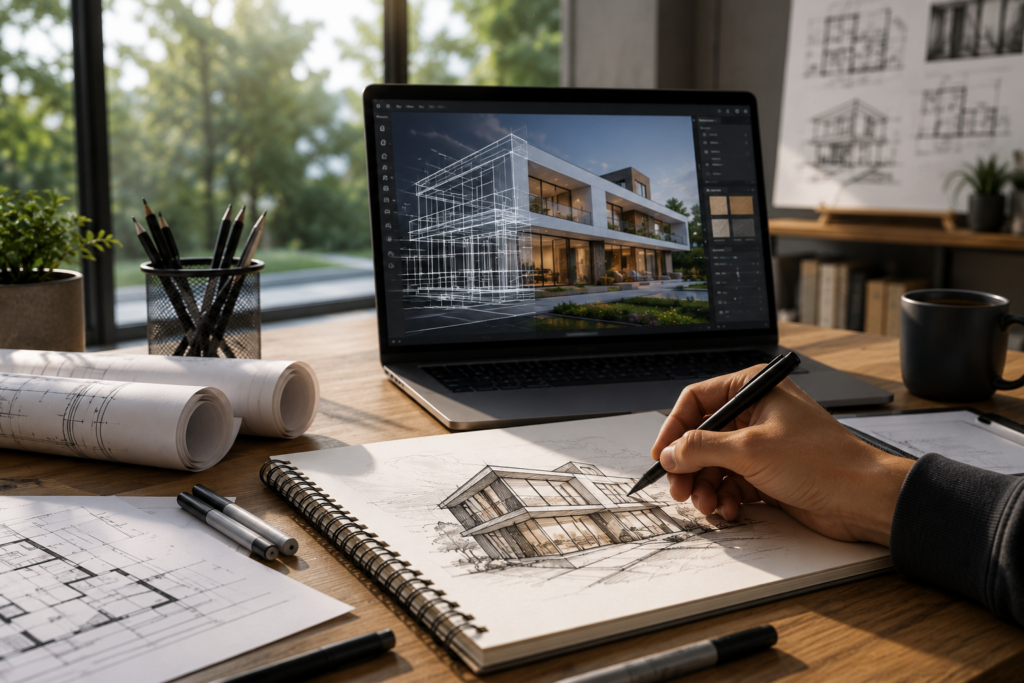
Artificial Intelligence in architecture refers to the use of intelligent software that can analyse data, recognise patterns, and generate design suggestions to support architects throughout the design process.
Unlike traditional design software, AI can process large amounts of information in seconds. It can compare thousands of design possibilities, analyse environmental conditions, optimise layouts, and assist with project documentation.
Rather than designing buildings independently, AI works as a digital assistant that helps architects make faster and more informed decisions.
Modern architecture firms are increasingly integrating AI with technologies such as:
- Building Information Modeling (BIM)
- Computational Design
- Parametric Design
- Digital Fabrication
- 3D Visualization
- Environmental Simulation
These technologies enable teams to create better-performing buildings while improving efficiency throughout the project lifecycle.
How AI Is Transforming Modern Architecture
The architectural process involves research, planning, design development, technical documentation, coordination, and construction supervision. AI has the ability to support many of these stages.
1. Faster Concept Development
Traditionally, architects spend considerable time developing multiple design concepts before selecting the most suitable direction.
With AI-assisted tools, architects can quickly generate several conceptual options based on project requirements. This allows design teams to explore more ideas in less time while maintaining complete creative control.
The architect still evaluates every concept, refines the best solutions, and ensures that the final design aligns with the client’s vision.
2. Better Space Planning
Efficient space planning is essential for every successful building.
AI can analyse room sizes, circulation paths, natural lighting, furniture placement, accessibility, and functional relationships between spaces.
These insights help architects optimise layouts while improving comfort and usability for future occupants.
3. Sustainable Design Solutions
Sustainability has become a major priority across the UAE construction industry.
AI assists architects by analysing:
- Sunlight exposure
- Wind movement
- Building orientation
- Energy performance
- Thermal comfort
- Material efficiency
This information helps create environmentally responsible buildings that reduce energy consumption while improving occupant comfort.
AI in Interior Design
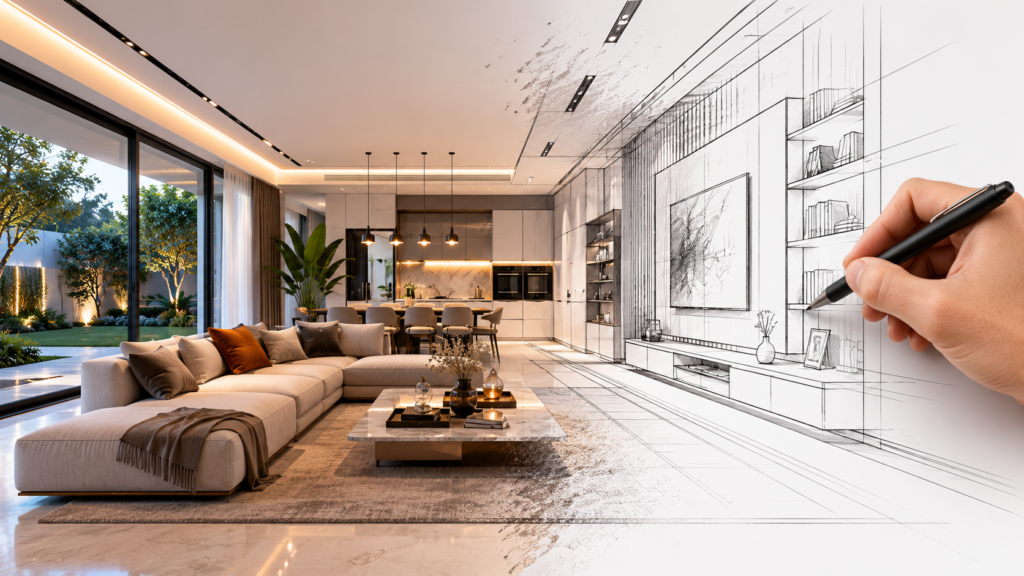
Interior design is about much more than selecting furniture or colours. It requires careful planning to create spaces that are functional, comfortable, and visually appealing.
AI has become a valuable tool for interior designers by supporting tasks such as:
- Furniture layout optimisation
- Lighting simulations
- Colour palette recommendations
- Material comparisons
- Space utilisation
- Realistic 3D visualisations
These capabilities help clients better understand the proposed design before construction begins.
However, successful interior design still depends on understanding how people live, work, and interact within a space—something only experienced designers can truly interpret.
The Benefits of AI for Clients
AI doesn’t just improve the architect’s workflow—it also enhances the client experience.
Clients benefit from:
- Faster design revisions
- More design options
- Improved project visualisation
- Better communication
- Reduced design errors
- Increased project efficiency
- Enhanced sustainability
- More informed decision-making
Instead of waiting weeks for every revision, AI-supported workflows allow architects to explore alternatives more efficiently while maintaining design quality.
Why AI Cannot Replace Architects
Although AI is an incredibly powerful technology, it has important limitations.
One of the biggest misconceptions is that AI will eventually replace architects.
The reality is very different.
Architecture Is About People
Every project begins with understanding people.
A family may want a home that feels warm and welcoming.
A hotel owner may want guests to experience luxury and comfort.
A restaurant may aim to create a memorable atmosphere.
AI cannot understand emotions, memories, cultural values, or personal experiences the way humans do.
Professional architects translate these human needs into meaningful spaces.
Creativity Cannot Be Automated
AI generates ideas based on existing information.
Architects create original solutions through imagination, experience, observation, and collaboration.
Every successful architectural project reflects human creativity rather than algorithmic prediction.
Site Conditions Require Human Judgment
Every site presents unique challenges.
Architects visit locations, analyse surroundings, coordinate with consultants, identify construction constraints, and solve unexpected problems.
AI cannot replace on-site experience or professional judgement.
Legal Responsibility
Architects are responsible for ensuring designs comply with building regulations, safety standards, engineering requirements, and local authority approvals.
AI cannot sign drawings or accept professional liability.
The responsibility always belongs to qualified professionals.
AI and Human Creativity: The Perfect Partnership
The future of architecture is not about AI replacing architects.
It is about architects using AI to work smarter.
Just as calculators did not replace engineers and computers did not replace designers, AI will not replace architects.
Instead, it removes repetitive tasks so professionals can spend more time solving complex design challenges and creating exceptional spaces.
Technology enhances creativity—it does not replace it.
Why This Matters in the UAE
The UAE has become one of the world’s leading destinations for innovative architecture.
From iconic skyscrapers to luxury villas, hospitality developments, retail spaces, and smart cities, the demand for advanced design solutions continues to grow.
Clients increasingly expect:
- Sustainable buildings
- Smart technologies
- Faster project delivery
- Efficient planning
- High-quality visualisation
- Unique architectural identities
AI helps meet these expectations, but only when guided by experienced professionals who understand local regulations, climate conditions, cultural preferences, and construction practices.
How ZFA Studio Combines Innovation with Design Excellence
At ZFA Studio, technology is an important part of our design process—but it never replaces creativity.
Our multidisciplinary approach combines:
- Architecture
- Interior Design
- Computational Design
- Parametric Design
- Digital Fabrication
- Technical Documentation
- 3D Visualization
By integrating advanced digital workflows with practical architectural expertise, we deliver projects that are both visually inspiring and technically sound.
Every design is developed around the client’s goals, lifestyle, business requirements, and long-term vision.
Whether designing luxury residences, commercial developments, hospitality spaces, retail environments, or bespoke interiors, our focus remains the same: creating meaningful spaces that balance innovation, functionality, and timeless design.
Frequently Asked Questions
Can AI design an entire building?
AI can generate concepts and assist with planning, but professional architects are responsible for developing, refining, and approving the final design.
Is AI replacing architects?
No. AI is a design tool that improves productivity, while architects continue to provide creativity, technical expertise, and professional judgement.
Does AI improve sustainability?
Yes. AI helps analyse energy performance, daylight, ventilation, and material efficiency, enabling more sustainable architectural solutions.
Is AI useful for interior design?
Absolutely. AI supports layout planning, lighting analysis, material selection, and realistic visualisations, making the design process faster and more efficient.
Conclusion
Artificial Intelligence is reshaping the future of architecture and interior design by improving efficiency, enabling smarter decision-making, and supporting more sustainable design solutions. However, technology alone cannot create spaces that inspire people, reflect culture, or respond to the unique needs of every client.
The most successful projects are created when human creativity and intelligent technology work together.
At ZFA Studio, we embrace innovation while recognising that exceptional architecture begins with people. By combining advanced digital tools with architectural expertise, we create environments that are functional, elegant, sustainable, and built to stand the test of time.
If you’re planning a residential, commercial, hospitality, or interior design project in the UAE, our team is ready to transform your vision into reality through thoughtful design and future-focused innovation.
Ready to create something extraordinary? Contact ZFA Studio today and discover how technology-driven architecture can bring your ideas to life.